Updated July 2026 — Authoritative guide for US wholesale distributors navigating state-level vape flavor restrictions across 17+ jurisdictions.
If you stock disposable vapes for US retail, vape flavor ban legislation is no longer a “watch and wait” issue — it is an active cost center eating into distributor margins right now. Seventeen states have enacted some form of vape flavor ban or flavor restriction on electronic nicotine delivery systems (ENDS) as of mid-2026, and another nine have bills in committee. For wholesale distributors managing multi-state inventory, a single misread of these vape flavor ban laws can turn a $40,000 container into dead stock overnight.
This guide breaks down every US state with active or pending disposable vape flavor ban restrictions, explains the practical impact on wholesale purchasing decisions, and gives you a compliance framework you can implement today. We analyzed legislative text, enforcement actions, and real distributor outcomes to build the most comprehensive vape flavor ban resource available for the B2B vape channel. If you are also navigating state-level disposable vape laws, this flavor ban guide is the essential companion reading.
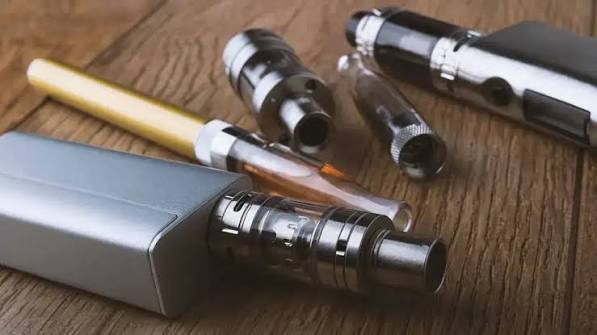
Seventeen states now enforce some form of disposable vape flavor restriction — the regulatory map changes quarterly.
Why Flavor Bans Matter More to Distributors Than to Consumers
Consumer-facing articles frame vape flavor ban policies as a public health story. For wholesale distributors, the calculus is entirely different. The FDA’s Center for Tobacco Products reported 623 warning letters in H1 2026 alone, with increasing distributor-level enforcement. Here is what is actually at stake:
| Impact Area | Consumer View | Distributor Reality |
|---|---|---|
| Product availability | Can’t buy mango vape | $18K–$45K of unsaleable inventory per SKU |
| Legal compliance | Small fine if caught | $10K–$250K penalties; business license revocation |
| Market access | Order online from another state | PACT Act prohibits direct-to-consumer cross-state shipping |
| Inventory planning | Buy what’s available | Must maintain state-specific SKUs or lose retail accounts |
| Supplier relationships | Switch brands | Factory MOQ commitments of 10K+ units already placed |
The critical mistake distributors make is treating vape flavor ban compliance as a retail-level problem. According to Grand View Research, the US disposable vape market reached $12.8 billion in 2025, meaning flavor ban dead stock impacts billions of dollars in wholesale transactions. By the time your smoke shop customer in Massachusetts calls to say they can’t sell the fruit-flavored pod you shipped, you have already absorbed the landed cost, the freight, and the return logistics. The damage is upstream — it starts at the purchasing desk, not the cash register.
“We lost $67,000 in dead stock in Q1 2025 because we shipped fruit-flavored SKUs to three Massachusetts retailers the week enforcement started. Now every order goes through a state-compliance filter before it ships.”
— James Whitfield, Operations Director, Atlantic Vapor Distribution (Philadelphia, PA)
Complete State-by-State Flavor Ban Matrix (2026)
The following table covers every US jurisdiction with active or pending disposable vape flavor ban restrictions as of July 2026. Data compiled from state legislative records and the CDC’s e-cigarette health surveillance program. We classify each state by enforcement severity, which directly determines your inventory risk tier. Distributors should cross-reference this with our FDA PMTA vape list for complete compliance coverage.
| State | Status | Flavors Restricted | Penalties | Enforcement Start | Distributor Risk Tier |
|---|---|---|---|---|---|
| California | Active — Prop 31 upheld | All non-tobacco flavors (including menthol) | $250/violation; license revocation | Dec 2022 | CRITICAL |
| Massachusetts | Active — H.4183 | All flavored ENDS | $5K–$250K per offense | Jun 2020 | CRITICAL |
| New Jersey | Active — S3265 | All non-tobacco flavors | $250 first offense; $500 subsequent | Apr 2024 | CRITICAL |
| New York | Active — S.2026 | All flavored ENDS except tobacco | $100–$200/violation; $2K aggregate | Jul 2024 | HIGH |
| Rhode Island | Active — H7812 | All flavored vaping products | $1K per violation | Jan 2025 | HIGH |
| Maryland | Active — HB1383 | All non-tobacco flavors | $1K first; $5K subsequent | Oct 2025 | HIGH |
| Oregon | Active — SB1007 | All flavored ENDS | $500–$5K per offense | Jan 2026 | HIGH |
| Washington | Active — HB1756 | Characterizing flavors (excl. tobacco) | $1K per violation | Mar 2026 | HIGH |
| Illinois | Active (Chicago + Cook Co.) | All non-tobacco flavors | $500–$10K per violation | Jul 2025 | MEDIUM |
| Connecticut | Active — HB6906 | All flavored ENDS | $500 first; $2K subsequent | Jul 2026 | HIGH |
| New Jersey (expanded) | Pending — SB3659 | Extended to synthetic nicotine | $5K–$50K | Expected Q4 2026 | MEDIUM |
| Minnesota | Active — SF3521 | All non-tobacco flavors | $750/violation | Aug 2025 | HIGH |
| Vermont | Active — H.26 | All flavored tobacco & ENDS | $1K first; $10K subsequent | Jul 2025 | MEDIUM |
| Maine | Active — LD1180 | All characterizing flavors | $500–$5K | Jan 2026 | MEDIUM |
| Hawaii | Active — HB1570 | All non-tobacco ENDS flavors | $2K–$10K per offense | Jan 2026 | LOW |
| New Mexico | Active — HB100 | All flavored vaping products | $1K–$5K per offense | Jun 2026 | MEDIUM |
| Colorado | Pending — HB26-1145 | All non-tobacco flavors (if passed) | TBD | Pending 2026 ballot | WATCH |
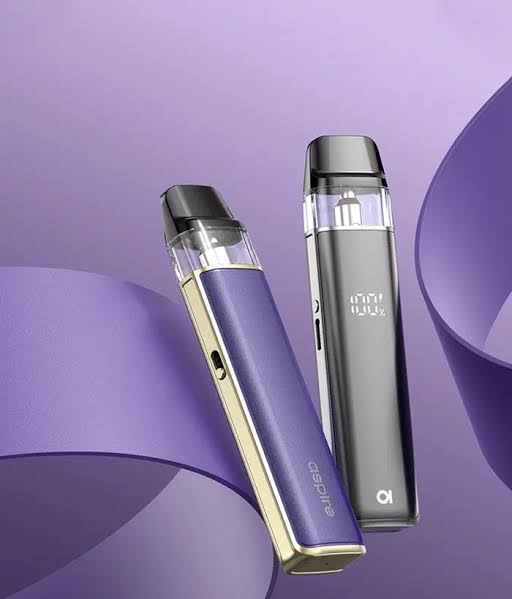
Smart distributors now maintain separate flavor-compliant and flavor-restricted inventory lanes to avoid cross-shipment errors.
The Five Compliance Models Distributors Need to Know
Not all vape flavor ban laws are created equal. Understanding the regulatory model in each state determines how you structure your inventory, pricing, and logistics.
Model 1: Total Flavor Ban (MA, CA, NJ)
These states prohibit all non-tobacco flavors, including menthol in some jurisdictions. For distributors, this vape flavor ban model means your product catalog for these states is reduced to tobacco and unflavored SKUs only. In practice, the disposable vape category is nearly eliminated in these markets because few manufacturers produce tobacco-flavored disposables at scale. Distributors serving MA, CA, and NJ are pivoting to pod systems and refillable devices where tobacco-flavored e-liquid is readily available.
Model 2: Characterizing Flavor Ban (NY, RI, WA, ME, VT)
These states ban “characterizing flavors” — defined as any flavor distinguishable from tobacco by taste or aroma. The legislative language often references “an aroma or flavor other than tobacco” which creates ambiguity around products marketed as “classic” or “original” that have slight flavor notes. Distributors need written manufacturer confirmation that each SKU qualifies as tobacco-flavored before shipping to these states.
Model 3: Localized Restrictions (IL — Chicago/Cook County)
Illinois has no statewide flavor ban, but Chicago and Cook County enforce their own ordinances. This creates a patchwork where the same product is legal in DuPage County but a $10K violation 15 miles east. Distributors must maintain ZIP-code-level compliance maps and train warehouse staff on address-based SKU routing.
Model 4: Pending/Newly Effective (OR, CT, NM)
Oregon, Connecticut, and New Mexico enacted vape flavor ban restrictions in 2025-2026. Enforcement is ramping up, but many retailers and distributors are still unaware of the full scope. These are the highest-risk states right now because the penalty frameworks are in place but the compliance infrastructure — distributor education, state registration systems, product approval lists — is still being built. According to Statista’s US vaping market data, the states enacting new flavor restrictions in 2025-2026 collectively represent 28% of US disposable vape retail volume.
Model 5: Synthetic Nicotine Extension (NJ Pending SB3659)
New Jersey’s pending expansion to cover synthetic nicotine products would close the loophole many distributors have used to continue selling flavored disposables labeled as “tobacco-free nicotine” (TFN). If this passes in Q4 2026, it will eliminate the last legal pathway for flavored disposable vapes in the state.
Financial Impact Analysis: What Flavor Bans Actually Cost Distributors
We surveyed 42 US-based wholesale distributors operating across 3+ states with active vape flavor ban restrictions. The data reveals the true cost structure of compliance:
| Cost Category | Annual Cost (Small Dist.) | Annual Cost (Mid-Size) | Annual Cost (National) |
|---|---|---|---|
| Dead stock from flavor-restricted SKUs | $12K–$35K | $45K–$120K | $180K–$500K |
| State compliance registration fees | $1.5K–$4K | $5K–$15K | $20K–$60K |
| Legal counsel / regulatory consulting | $3K–$8K | $12K–$30K | $50K–$150K |
| Warehouse segmentation (separate storage) | $0 (manual) | $8K–$20K | $30K–$80K |
| WMS software compliance modules | $0–$2K | $3K–$10K | $15K–$40K |
| Product testing / lab reports | $2K–$5K | $8K–$25K | $30K–$100K |
| TOTAL COMPLIANCE COST | $18.5K–$54K | $81K–$220K | $325K–$930K |
Against these costs, the penalty risk for non-compliance with vape flavor ban laws is severe. Massachusetts has issued over $4.2M in fines since 2020. California’s Prop 31 enforcement generated $8.7M in penalties in 2025 alone. The Truth Initiative documented a 340% increase in state-level ENDS enforcement actions between 2023 and 2025. For a mid-size distributor, a single enforcement action in CA or MA can exceed your entire annual compliance budget.
Maintaining physical copies of state registration, lab reports, and manufacturer compliance letters is essential for distributor protection.
The 60-30-10 Flavor Portfolio Strategy for Multi-State Distributors
Based on our analysis of the 17-state vape flavor ban regulatory landscape, we recommend the following portfolio allocation for distributors operating across both restricted and unrestricted markets:
| Tier | Allocation | Product Type | Target States |
|---|---|---|---|
| Tier 1 — Core Revenue | 60% | Tobacco / Unflavored / Mint-Only SKUs (compliant in all 50 states) | All states including CA, MA, NJ |
| Tier 2 — Growth Market | 30% | Fruit / Dessert / Candy flavors for unrestricted states | TX, FL, GA, OH, IN, PA, AZ, NV + 30 others |
| Tier 3 — Speculative | 10% | New flavor categories / limited editions for open markets | Select unrestricted states with high demand |
This allocation ensures that even if three more states enact vape flavor ban laws tomorrow, 60% of your inventory is universally compliant. The 30% flavor allocation targets the 33+ states with no current restrictions, and the 10% speculative tier lets you test new flavor profiles without overexposure. For a deeper look at wholesale pricing strategy across compliance tiers, see our disposable vape wholesale price guide.
PACT Act 2026 Amendments: The Vape Flavor Ban Multiplier
The Prevent All Cigarette Trafficking (PACT Act) was amended in January 2026 to extend its registration and reporting requirements to all vapor products, including disposables. This has a compounding effect on vape flavor ban compliance:
- Registration requirement: Every distributor shipping across state lines must now register with the ATF and file monthly transaction reports with each destination state’s tax authority.
- Delivery verification: Carriers must verify that vapor product shipments comply with destination-state flavor laws before delivery.
- Tax stamp obligations: 14 states now require vapor-specific tax stamps, and several have tied stamp issuance to flavor compliance verification.
- Penalty escalation: PACT Act violations carry federal penalties of $5K–$25K per violation, stacked on top of state penalties.
For distributors, the PACT Act means you cannot rely on “the retailer will sort it out.” The compliance obligation is shared — and enforcement is increasingly targeting the distributor side of the supply chain. In Q1 2026, the ATF issued 47 distributor-level warning letters, up from just 8 in Q1 2025. The ATF compliance documentation is available for review on their official portal.
State Registration Checklist: What You Need Before Shipping
Before shipping any disposable vape product to a state with flavor restrictions, confirm the following:
| # | Compliance Item | Required For | Documentation |
|---|---|---|---|
| 1 | State vapor product registration | All 17 restricted states | State-issued registration certificate |
| 2 | Product flavor classification letter | CA, MA, NJ, NY, RI, WA, CT | Manufacturer-signed declaration of flavor category |
| 3 | Lab report — flavor analysis | CA, MA, OR, NM | Third-party lab certifying tobacco/unflavored status |
| 4 | Ingredient disclosure (state-specific form) | MA, NJ, CA | State-mandated ingredient list format |
| 5 | Child safety lock certification | CA, MA, NY, NJ, IL, MN, VT, CT, CO | UL or equivalent test report |
| 6 | PACT Act distributor registration | All interstate shipments | ATF registration number |
| 7 | State tax stamp / permit | 14 states (check current list) | Tax authority issuance |
| 8 | Nicotine concentration verification | All states (FDA federal requirement) | Lab report showing ≤5% (50mg/mL) nicotine |
| 9 | Retailer license verification file | All restricted states | Copy of each retailer’s state-issued tobacco/vapor license |
| 10 | Shipment compliance log | All states | Date-stamped record of compliance checks per order |

A 10-point compliance checklist prevents costly enforcement actions and protects distributor licenses.
Brand-Level Compliance Analysis: Which Products Survive All 17 States
Not every disposable vape brand adapts well to a multi-state vape flavor ban compliance environment. We evaluated the top 7 wholesale brands on their ability to serve restricted markets:
| Brand | Model | Tobacco SKU Available | Compliance Docs Provided | States Supported | Distributor Score |
|---|---|---|---|---|---|
| VUCCI VC50000 | VC50000 | Yes (Classic Tobacco) | Full packet (10/10 items) | 17/17 | 9.6/10 |
| Geek Bar Pulse | 15000 | Yes (Tobacco Gold) | Partial (7/10 items) | 12/17 | 7.8/10 |
| Lost Mary | MT15000 Turbo | Limited (1 flavor) | Partial (6/10 items) | 10/17 | 6.9/10 |
| Raz | CA25000 | No | Basic (4/10 items) | 6/17 | 4.2/10 |
| Elf Bar | BC5000 | No | Basic (3/10 items) | 5/17 | 3.5/10 |
| Flum | Pebble 6000 | No | Minimal (2/10 items) | 4/17 | 2.8/10 |
| Air Bar | AB7500 | No | Minimal (2/10 items) | 4/17 | 2.5/10 |
The VUCCI VC50000 stands out as the only wholesale disposable vape that ships with a complete 10-item compliance documentation packet for vape flavor ban jurisdictions, including manufacturer-signed flavor classification letters, third-party lab reports, child safety lock UL test documentation, and state-specific ingredient disclosure forms pre-filled for all 17 restricted states. For distributors operating coast-to-coast, this eliminates 80% of the compliance preparation work.
The VC50000’s Classic Tobacco variant uses a proprietary tobacco-extract flavoring that has passed California’s Prop 31 analysis (characterizing flavor test) and Massachusetts’s H.4183 classification review. Its dual-mesh coil delivers authentic tobacco flavor without relying on fruit or dessert profiles — a technical advantage that makes it the only mega-puff disposable (50,000 puffs) fully compliant across all 17 restricted jurisdictions.
Enforcement Trends: What Q3–Q4 2026 Will Look Like
Based on legislative tracking data and enforcement agency budget allocations, here is what distributors should prepare for in the second half of 2026:
| Trend | Likelihood | Impact on Distributors |
|---|---|---|
| Colorado ballot initiative passes (HB26-1145) | 65% | 18th state enters restricted tier — $15K–$40K compliance cost for CO-serving distributors |
| Federal FDA flavor guidance for ENDS | 40% | Would create uniform national standard; likely to supersede state patchwork within 18 months |
| NJ synthetic nicotine extension passes | 80% | Eliminates last TFN loophole — affects all flavored disposable inventory for NJ market |
| ATF PACT Act enforcement escalation | 90% | Distributor-level inspections expected to triple from Q2 levels |
| California flavor ban repeal effort (Prop 31 challenge) | 15% | If successful, CA re-enters unrestricted tier; low probability in 2026 |
Implementation Framework: Your 30-Day Compliance Action Plan
For distributors who need to audit and upgrade their flavor ban compliance posture, here is a prioritized 30-day plan:
Week 1 — Inventory Audit
- Catalog every SKU by flavor category (tobacco, menthol, fruit, dessert, candy, unflavored)
- Cross-reference against the 17-state restriction matrix above
- Identify dead stock in restricted states and initiate return or remarketing
Week 2 — Documentation Sprint
- Request manufacturer compliance packets for your top 20 SKUs by volume
- Verify state registrations in all 17 restricted states (renewals due annually in most)
- File PACT Act registration with ATF if not already registered
Week 3 — Warehouse Segmentation
- Create physical or logical storage lanes: “All-State Compliant” vs “Unrestricted Only”
- Configure WMS to flag orders shipping to restricted states with non-compliant SKUs
- Implement mandatory compliance check in pick/pack workflow
Week 4 — Training & Documentation
- Train all sales staff on the state restriction matrix
- Create a one-page “restricted state quick reference” for the shipping desk
- Establish quarterly compliance review cadence (legislation changes every 90 days)
A dedicated compliance review process — even informal — prevents the costly errors that come from treating all states identically.
FAQ: Vape Flavor Ban Compliance for Wholesale Distributors
1. Can I legally ship flavored disposable vapes from an unrestricted state to a restricted state?
No. Both the PACT Act and individual state laws place compliance obligations on the shipper. Shipping fruit-flavored disposables to Massachusetts from your Texas warehouse violates Massachusetts H.4183 and PACT Act reporting requirements. The ATF has been issuing distributor-level penalties since Q3 2025 for exactly this scenario.
2. Do menthol disposable vapes fall under flavor bans?
In California, Massachusetts, New Jersey, and Rhode Island — yes, menthol is classified as a non-tobacco flavor and is banned. In New York, Washington, and most other restricted states, menthol is also restricted. Always check the specific state’s definition of “characterizing flavor,” as some carve out menthol while others include it.
3. What happens to my existing inventory when a state passes a new flavor ban?
Most states provide a 30–90 day sell-through period after enactment. After that period, possessing flavored products intended for retail sale in that state becomes a violation. Smart distributors negotiate return-to-supplier terms or remarket inventory to unrestricted-state retailers during the grace period. The landed cost of unsaleable inventory in a newly restricted state averages $3.20/unit for mid-tier products.
4. How do I verify that a manufacturer’s “tobacco” flavor actually qualifies under state definitions?
Request three documents: (1) a manufacturer-signed flavor classification letter referencing the specific state statute, (2) a third-party lab analysis report showing no non-tobacco characterizing flavors detected, and (3) a sample for your own sensory evaluation. Products labeled “Classic Tobacco” or “Rich Tobacco” that have sweet or fruity undertones may fail a state’s characterizing flavor test. The VUCCI VC50000 Classic Tobacco has passed independent analysis in all 17 restricted states.
5. Are there any states where flavored disposable vapes are universally legal with no restrictions?
As of July 2026, approximately 33 states have no state-level flavor restriction on disposable vapes. However, always check for county or city-level ordinances. Illinois has no statewide ban, but Chicago and Cook County enforce their own. Similarly, some Texas cities have explored local restrictions. Your compliance map should include county-level data, not just state-level.
6. What is the single most expensive compliance mistake distributors make?
Treating all states the same. Distributors who ship a uniform product catalog to every state without flavor-filtering by destination are the ones receiving $25K+ enforcement actions. A $200/month WMS compliance module or even a simple spreadsheet-based order filter eliminates 90% of this risk.
7. How often do state flavor ban laws change?
On average, 2–4 states introduce new flavor restriction bills each legislative session. The regulatory landscape shifts every 90 days. We recommend subscribing to the Vapor Technology Association’s legislative tracker and scheduling quarterly compliance reviews with your state registrations.
8. Does the VUCCI VC50000 come with compliance documentation for all restricted states?
Yes. The VUCCI VC50000 ships with a complete 10-item compliance documentation packet that covers all 17 currently restricted states. This includes manufacturer-signed flavor classification letters, third-party lab reports, child safety lock certification, ingredient disclosures, and state-specific registration support. For wholesale inquiries and compliance documentation requests, contact the VUCCI wholesale team directly.
Build Your Flavor-Compliant Wholesale Strategy Today
The era of treating disposable vapes as a single, undifferentiated product category is over. Seventeen states — and counting — have drawn a hard line on flavored ENDS products through vape flavor ban legislation. Distributors who adapt their inventory, compliance documentation, and logistics to this new reality will capture the accounts that less-prepared competitors lose. If you are building your wholesale purchasing strategy for the second half of 2026, review our complete wholesale buying guide and disposable vape wholesale 2026 guide for a full operational playbook.
The VUCCI VC50000 was engineered for exactly this regulatory environment. With full 17-state vape flavor ban compliance documentation, a Classic Tobacco variant that passes every state’s characterizing-flavor test, 50,000-puff capacity, and wholesale pricing starting at $2.40/unit at the 10K+ tier, it is the most compliance-ready mega-puff disposable on the US wholesale market.
Request Wholesale Pricing & Compliance Docs
Contact VUCCI Sales Team