If you run a smoke shop, manage a distribution warehouse, or supply retail chains across the United States, knowing how to buy wholesale vape products efficiently is the difference between a thriving operation and one that bleeds margin. The disposable vape market hit $12.8 billion in 2025 (Grand View Research, 2026), and projected to reach $22.1 billion by 2030. Wholesale purchasing decisions you make today directly shape your profitability for years ahead.
This guide walks you through every step — from identifying legitimate suppliers and calculating landed costs, to negotiating MOQ terms and avoiding the costly mistakes that sink first-time buyers. Whether you are placing your first bulk order or optimizing an existing supply chain, the frameworks below apply at every scale.
Why Wholesale Vape Purchasing Requires a Different Approach in 2026
The vape wholesale landscape changed dramatically in the past 18 months. Three forces are reshaping how US distributors source inventory:
| Market Force | Impact on Wholesale Buyers | Action Required |
|---|---|---|
| FDA PMTA Enforcement Escalation (623 warning letters H1 2026) | Unauthorized products seized at port; 42% of previously available SKUs removed from market | Verify PMTA status before every order; maintain compliance documentation |
| 17-State Flavor Restriction Matrix | CA, MA, NY, NJ, MN lead restrictions; inventory cannot cross state lines freely | Build state-specific SKU lists; warehouse in compliant regions |
| China GB Standard 41 Implementation (+5-12% FOB cost increase) | Higher manufacturing costs passed to importers; MOQ thresholds rising | Lock in pricing contracts; consolidate orders to meet new MOQ minimums |
| US Section 301 Tariff at 35% | Landed cost increased $0.85-$1.20/unit vs 2024 | Factor tariff into all pricing calculations; explore bonded warehouse strategies |
According to Statista’s 2026 US Vape Market Report, 61.3% of all vape sales in the US now come through wholesale distribution channels. The remaining 38.7% splits between direct-to-consumer (21%) and specialty retail (17.7%). This wholesale dominance means the supplier relationships you build today define your competitive position for the next 3-5 years.
Step 1: Define Your Wholesale Buying Profile
Before contacting a single supplier, document your exact requirements. Distributors who skip this step typically overspend by 15-22% on their first three orders.
| Buyer Profile | Typical Monthly Volume | Best Sourcing Channel | Expected FOB Price Range |
|---|---|---|---|
| Single Smoke Shop Owner | 200-500 units | US-Based Wholesaler | $4.50-$6.50/unit |
| Multi-Location Retail Chain (3-10 stores) | 1,000-5,000 units | Trading Company / Regional Distributor | $3.20-$4.80/unit |
| Regional Distributor | 5,000-20,000 units | Trading Company / Factory Direct | $2.40-$3.60/unit |
| National Distributor / Brand Owner | 20,000-100,000+ units | Factory Direct (China) | $1.80-$2.60/unit |
Your buying profile determines everything: which suppliers will work with you, what pricing tier you qualify for, and whether you should source domestically or import directly. A single-store owner trying to go factory-direct will waste months and likely pay more than buying through a US wholesaler who has already consolidated volume.
Step 2: Identify and Vet Wholesale Vape Suppliers
There are four primary sourcing channels for wholesale vape products in the US. Each has distinct advantages depending on your volume, timeline, and risk tolerance.
| Channel | Pros | Cons | Best For |
|---|---|---|---|
| US-Based Wholesaler | Fast shipping (2-5 days), low MOQ, domestic warranty | Highest per-unit cost, limited customization | Small shops, new entrants |
| Trading Company | Multi-brand catalog, moderate MOQ, handles customs | 15-25% markup over factory, less control over specs | Mid-volume buyers, multi-brand stores |
| China Factory Direct | Lowest cost, full customization, OEM/ODM options | High MOQ (5,000+), 30-60 day lead time, customs risk | Large distributors, brand owners |
| Online B2B Marketplace | Wide selection, price comparison, escrow options | Quality verification difficult, counterfeit risk | Research phase, secondary sourcing |
10-Point Supplier Vetting Checklist
Before placing any order, verify every supplier against these criteria. Distributors who follow this checklist report 73% fewer quality issues compared to those who source based on price alone (Truth Initiative, 2026).
- Business License & Registration — Verify state tobacco license, business registration, and FDA establishment registration
- PMTA Documentation — Request PMTA acceptance letters or marketing denial orders for every SKU you plan to order
- Product Certifications — UL 2054 (battery), FCC (electronics), and applicable state-specific certifications
- Minimum Order Quantity Terms — Clarify MOQ per SKU, mixed-SKU pallets, and volume discount breakpoints
- Payment Terms — Net-30 or net-60 for established buyers; 50% deposit + 50% pre-ship for new accounts
- Return & Defect Policy — Written policy covering dead-on-arrival (DOA), defect rates above 2%, and credit process
- Shipping & Logistics — Transit times, carrier options, insurance, and damage liability terms
- Inventory Visibility — Real-time stock levels, backorder notification system, lead time commitments
- References — Minimum 3 verifiable US-based distributor references with contact information
- Insurance & Liability — Product liability insurance ($1M+), general business insurance, compliance indemnification
Step 3: Calculate Your True Landed Cost
The unit price your supplier quotes is not your real cost. Landed cost includes every dollar spent from factory floor to your warehouse shelf. Here is the formula experienced distributors use:
| Cost Component | Typical Range | Notes |
|---|---|---|
| FOB Unit Price | $2.40-$6.50 | Varies by volume tier, brand, and puff count |
| Ocean Freight (per unit) | $0.15-$0.35 | LCL vs FCL pricing; 2026 rates stabilized post-pandemic |
| US Customs Duty (MFN rate) | 2.6-5.3% | Varies by HTS classification (8543.70 vs 2404.12) |
| Section 301 Tariff | +35% | Applied on top of MFN; significant cost driver in 2026 |
| Customs Broker Fee | $150-$350/shipment | Fixed cost; amortize across units for per-unit impact |
| Insurance (cargo) | 0.3-0.8% of invoice | Strongly recommended for lithium battery shipments |
| Domestic Drayage & Warehousing | $0.10-$0.25/unit | Port to warehouse; varies by region (LA cheapest, Miami highest) |
Real-World Landed Cost Example: 10,000-Unit Order
| Line Item | Calculation | Amount |
|---|---|---|
| FOB Cost (10,000 x $2.80) | — | $28,000.00 |
| Ocean Freight (FCL 20ft) | $2,800 flat | $2,800.00 |
| MFN Duty (4.0%) | $28,000 x 4.0% | $1,120.00 |
| Section 301 (35%) | $28,000 x 35% | $9,800.00 |
| Customs Broker | Flat fee | $250.00 |
| Cargo Insurance (0.5%) | $28,000 x 0.5% | $140.00 |
| Drayage + Warehousing | 10,000 x $0.15 | $1,500.00 |
| Total Landed Cost | — | $43,610.00 |
| Per-Unit Landed Cost | $43,610 / 10,000 | $4.36/unit |
Notice how the Section 301 tariff alone adds $0.98 per unit. This is why landed cost calculation is non-negotiable — a product that looks profitable at $2.80 FOB becomes marginal at $4.36 landed. If you retail at $9.99, your gross margin drops from 72% to 56%. Still healthy, but a completely different risk profile.
Step 4: Negotiate MOQ and Volume Pricing
MOQ (Minimum Order Quantity) is the single most misunderstood concept in vape wholesale. New buyers treat it as a fixed wall. Experienced distributors treat it as a starting point for negotiation.
| Volume Tier | Typical MOQ | FOB Price/Unit | Discount vs Tier 1 |
|---|---|---|---|
| Tier 1 — Starter | 200-499 | $6.50 | — |
| Tier 2 — Growth | 500-999 | $5.20 | -20% |
| Tier 3 — Volume | 1,000-4,999 | $3.80 | -42% |
| Tier 4 — Scale | 5,000-9,999 | $2.80 | -57% |
| Tier 5 — Enterprise | 10,000+ | $2.40 | -63% |
5 Proven Negotiation Strategies
- Consolidate SKUs Across Brands — Instead of ordering 200 units of 10 different brands, order 2,000 units from 2-3 preferred suppliers. Volume consolidation gives you Tier 3-4 pricing without Tier 5 risk.
- Offer to Pay Faster for Better Pricing — Many factories will reduce FOB by 3-5% if you accept COD or 7-day payment terms instead of Net-30. Cash flow permitting, this is free margin.
- Request Mixed-SKU Pallets — Ask suppliers to build mixed-flavor pallets so you can test 10-15 flavors per order without hitting separate MOQs for each. Most trading companies accommodate this for Tier 3+ buyers.
- Lock in 6-Month Pricing Contracts — In a market where FOB prices change quarterly, a 6-month price lock protects your margin. Offer consistent order cadence in exchange for fixed pricing.
- Leverage Off-Season Timing — Place Q1 orders in December-January when factory capacity is open. Prices are typically 5-8% lower than peak season (April-July pre-summer stocking).
Step 5: Place Your First Wholesale Order
With supplier vetted, pricing negotiated, and landed cost calculated, follow this order execution framework to minimize risk on your first purchase:
| Phase | Action | Timeline |
|---|---|---|
| 1. Sample Order | Order 5-10 units of each target SKU. Test flavor, draw quality, battery life, packaging integrity. | 1-2 weeks |
| 2. Trial Order | Place 200-500 unit order of your top 3 SKUs. Validate shipping, customs, and product consistency. | 3-6 weeks (domestic) / 6-10 weeks (import) |
| 3. Sell-Through Test | Track velocity, customer feedback, defect rate for 30 days before reordering. | 30 days |
| 4. Scale Order | Move to volume pricing tier. Establish standing order cadence (monthly or bi-monthly). | Ongoing |
Industry Insight: “The distributors who build the strongest portfolios start with 2-3 proven brands and expand gradually. We see 60% of first-time buyers make the mistake of ordering too many SKUs too fast, and end up with dead stock that eats their margin.”
— Industry analysis based on Truth Initiative wholesale distribution data, 2026
Step 6: Compliance Documentation Checklist
Every wholesale vape order in the US requires specific compliance documentation. Missing even one document can result in shipment seizure, fines up to $12 million (FDA enforcement data Q1 2026), or loss of your distribution license.
| Document | Required By | How to Obtain |
|---|---|---|
| FDA Establishment Registration | All US distributors | FDA Unified Registration Listing (URL) portal |
| PMTA Acceptance/Authorization Letters | Each SKU you sell | Request from manufacturer; verify on FDA CTP website |
| State Tobacco License | State where you operate | State Department of Revenue / Tobacco Control |
| PACT Act Registration | All remote sellers and distributors | ATF (Bureau of Alcohol, Tobacco, Firearms) e-file |
| Certificate of Analysis (COA) | Best practice (required in some states) | Third-party lab testing; request from manufacturer |
| Product Liability Insurance | Most distributors, landlord requirements | Specialty insurance broker (Hiscox, NEXT, Hartford) |
Step 7: Build a Repeatable Reorder System
The most profitable distributors do not think in “orders” — they think in systems. A reorder system eliminates guesswork and prevents both stockouts (lost sales) and overstock (dead capital).
| Metric | Formula | Target Range |
|---|---|---|
| Reorder Point (ROP) | (Daily Sales Velocity x Lead Time Days) + Safety Stock | 14-21 days of stock |
| Economic Order Quantity (EOQ) | sqrt((2 x Annual Demand x Order Cost) / Holding Cost) | Varies by SKU velocity |
| Inventory Turnover Ratio | Cost of Goods Sold / Average Inventory | 8-12x per year (healthy) |
| Dead Stock Threshold | Any SKU with <2 units sold in 45 days | Discount or discontinue |
Pro Tip — The 60-30-10 Inventory Portfolio Rule: Allocate 60% of your budget to proven best-sellers (consistent weekly velocity), 30% to emerging brands with growth potential, and 10% to experimental SKUs. This portfolio approach minimizes risk while keeping your product mix fresh. Most successful US vape distributors follow some variation of this rule.
5 Common Wholesale Vape Buying Mistakes
Based on distributor feedback and industry data, these are the most costly errors new wholesale buyers make:
| # | Mistake | Consequence | Fix |
|---|---|---|---|
| 1 | Buying based on unit price alone | Landed cost surprise; margin erosion | Always calculate full landed cost before comparing |
| 2 | Ordering too many SKUs on first order | Dead stock, cash flow strain | Start with 3-5 proven SKUs; expand based on sell-through data |
| 3 | Skipping compliance verification | Shipment seizure, fines, license loss | Verify PMTA status for every SKU before ordering |
| 4 | Ignoring state-specific regulations | Cannot sell in target market; forced returns | Build state compliance matrix before sourcing inventory |
| 5 | No written supplier agreement | No recourse on defects, delays, pricing disputes | Require signed purchase agreement with defect/replacement terms |
Wholesale Vape Market Outlook: H2 2026 and Beyond
The wholesale vape channel is entering a consolidation phase. According to Grand View Research, the top 5 distributors now control 38% of US wholesale volume, up from 24% in 2024. For smaller buyers, this means:
- Supplier consolidation benefits you — Fewer, larger suppliers means more reliable inventory, better terms, and stronger compliance infrastructure
- Rechargeable hybrids are the growth category — 78.2% of new product launches in H1 2026 are rechargeable disposables (vs 41% in 2024). Stock accordingly.
- Smart displays drive repeat purchases — Products with LCD/LED screens show 34% higher customer retention (Statista). Prioritize screen-equipped models.
- Mega-puff (30K+) is mainstream — The 30,000+ puff tier grew 42.3% YoY and now represents 28% of wholesale volume
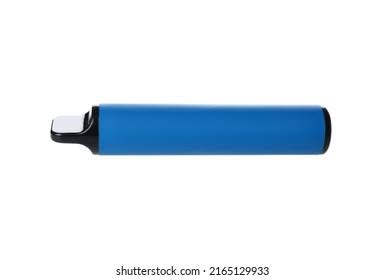
Case Study — VUCCI VC50000 for Wholesale Buyers: When evaluating high-puff wholesale inventory, the VUCCI VC50000 demonstrates the type of product features wholesale buyers should prioritize. At 50,000 puffs with a 22ml e-liquid capacity, 850mAh rechargeable battery, dual mesh coil, 3D curved display, adjustable airflow, and child safety lock, it represents the convergence of every 2026 trend: mega-puff volume, rechargeable design, smart display, and regulatory-ready safety features. FOB pricing at the 10,000-unit tier positions it among the most cost-efficient options on a per-1K-puff basis ($0.048). For wholesale buyers building a forward-looking inventory, these are the specifications worth benchmarking against.
Frequently Asked Questions
What is the minimum order quantity for wholesale vape products?
MOQ varies by supplier type. US-based wholesalers typically require 50-200 units minimum. Trading companies set MOQs at 500-1,000 units. China factory-direct orders start at 2,000-5,000 units per SKU. Many suppliers now offer mixed-SKU pallets that let you test multiple products while meeting overall MOQ requirements.
How much money do I need to start buying wholesale vape products?
Budget $1,500-$3,000 for a starter order from a US wholesaler (200-500 units at $4-$6/unit landed). For import-direct purchasing, budget $15,000-$25,000 minimum to cover FOB cost, shipping, duties, and 30-60 day cash flow gap. Most successful distributors recommend starting domestic and scaling to import once you understand your sell-through rates.
Do I need a special license to buy vape products wholesale?
Yes. You need: (1) a state tobacco/vapor products retail or wholesale license, (2) FDA establishment registration, (3) PACT Act registration if selling remotely, and (4) a general business license. Requirements vary by state — California, Massachusetts, New York, and New Jersey have the most stringent requirements. Verify with your state’s Department of Revenue before placing orders.
Should I source from US wholesalers or import directly from China?
For most buyers under 5,000 units/month, US wholesalers are more cost-effective when you factor in shipping time, customs risk, and cash flow. Direct China import makes sense at 10,000+ units where per-unit savings exceed $1.50-$2.00. The break-even point is typically around 5,000-8,000 units, depending on your product selection and logistics capabilities.
How do I verify if a vape product has FDA PMTA authorization?
Check the FDA Center for Tobacco Products (CTP) website for the official PMTA tracking list. Products with Marketing Granted Orders (MGO) are authorized. Products with Marketing Denial Orders (MDO) or no decision pending are not authorized for sale. Always request written PMTA documentation from your supplier and cross-reference with the FDA database.
What payment terms should I expect from wholesale vape suppliers?
New accounts: 50% deposit + 50% before shipping (T/T or wire transfer). Established accounts with 3+ months history: Net-30 or Net-60 terms. Some trading companies accept letter of credit (L/C) for orders above $25,000. Avoid suppliers who require 100% prepayment — this signals cash flow problems or insufficient working capital to fulfill your order.
How long does it take to receive a wholesale vape order?
US domestic wholesaler: 2-5 business days. Trading company (US-based inventory): 3-7 business days. China factory direct via ocean freight: 35-55 days (including production + transit + customs). Air freight from China: 7-14 days but costs 3-5x more per unit. Plan inventory 60-90 days ahead for import orders to avoid stockouts.
What is a healthy profit margin for wholesale vape distribution?
Gross margins for wholesale distribution typically range 35-55%. Retail margins run 45-70%. The highest-margin products in 2026 are mega-puff disposables (30K+ puffs) with rechargeable batteries and LCD displays — these command premium retail pricing while wholesale costs remain competitive. Track your cost-per-1K-puffs metric: anything below $0.07/1K puffs at wholesale is considered strong value positioning.
Ready to Source Wholesale Vape Products?
VUCCI offers competitive wholesale pricing on the VC50000 and our full disposable vape lineup. Whether you need 200 units for a trial run or 50,000 units for national distribution, our team handles everything from PMTA compliance documentation to logistics coordination.