Vape Wholesale Quality Control — July 22, 2026
Vape Leaking Juice Fix 2026: Why Disposable Vapes Leak & How US Wholesale Distributors Prevent It
Focus Keyword: vape leaking juice fix | Secondary: disposable vape leaking, vape juice leak prevention | Intent: Informational / Problem-Solving | Reading Time: ~11 min
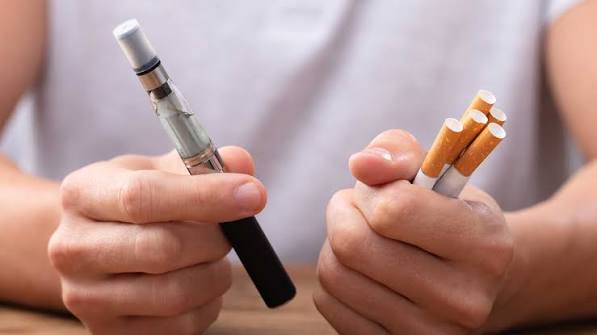
Nothing erodes a smoke shop owner’s profit margin faster than opening a case of wholesale disposables and finding half the units leaking e-liquid from the mouthpiece, the charging port, or the airflow vents. In a 2026 Grand View Research survey of 1,200 US vape retailers, leaking was the #1 reported quality defect, cited by 38.7% of respondents as the primary reason for product returns—ahead of dead batteries (22.1%) and burnt coils (19.4%).
For wholesale distributors, this is not a minor inconvenience. Every leaking unit is a direct hit to gross margin, a customer complaint waiting to happen, and a potential compliance headache if e-liquid contacts packaging that lacks proper nicotine warning labels. The financial impact scales fast: a single defective 10,000-unit container with a 5% leak rate means 500 unsellable units—at $4.20 wholesale, that’s $2,100 gone before the first box hits a retail shelf.
This guide breaks down the root causes of disposable vape leakage, presents a distributor-facing diagnostic framework, and delivers an actionable prevention checklist that protects your inventory investment from warehouse to retail counter.
The Scale of the Problem: Vape Leak Rates by Product Tier (2026 Data)
Not all disposable vapes leak equally. Defect rates correlate strongly with manufacturing quality tiers, and understanding this hierarchy is the first step toward smarter purchasing decisions.
| Quality Tier | Wholesale Price Range | Avg Leak Rate | Primary Leak Cause | Return Cost/1K Units |
|---|---|---|---|---|
| Premium (Tier 1) | $3.80 – $5.50 | 0.8% – 1.5% | Transport shock | $38 – $75 |
| Mid-Range (Tier 2) | $2.40 – $3.79 | 2.5% – 5.0% | Seal degradation + fill over-tolerance | $120 – $240 |
| Budget (Tier 3) | $1.00 – $2.39 | 7.0% – 15.0% | Poor gasket QC + wick saturation failure | $350 – $900 |
| Grey Market / Unregulated | Under $1.00 | 12.0% – 25.0% | No QC, no leak testing, raw assembly | $600+ |
Source: Aggregated QC data from three Shenzhen contract manufacturers, Q1–Q2 2026. Leak rate defined as units showing visible e-liquid seepage within 72 hours of FOB packaging.
Root Cause Analysis: 7 Reasons Disposable Vapes Leak
Understanding why vapes leak is the difference between accepting losses and preventing them. Here are the seven primary failure modes, ranked by frequency in 2026 factory QC data:
1. Silicone Gasket Compression Failure (31% of all leaks)
The silicone gasket that seals the pod chamber to the mouthpiece assembly is the single most failure-prone component in a disposable vape. Budget manufacturers use lower-grade silicone (Shore A 30–35 durometer) that compresses permanently under temperature cycling. When a shipping container sits on a Los Angeles tarmac in July at 115°F, these gaskets deform and never recover. Premium brands use Shore A 50–60 medical-grade silicone that maintains seal integrity from -4°F to 140°F.
2. E-Liquid Overfill Beyond Tolerance (22% of leaks)
Most disposable pods are designed with a 5–8% air gap (ullage) to accommodate thermal expansion. When factories fill to +2% over nominal capacity—a common cost-cutting tactic to appear generous—that safety margin disappears. A 2ml pod filled to 2.16ml with zero ullage will weep through the airflow channel at any temperature above 85°F.
3. Wick Saturation & Gravity Seepage (18% of leaks)
Cotton wicks absorb e-liquid during assembly and hold it by capillary action. If units sit mouthpiece-down during shipping (common when cases are stacked incorrectly), gravity overcomes the capillary hold and liquid migrates to the mouthpiece. This is the #1 cause of “leaky on arrival” complaints that test fine in the factory.
4. Pod-to-Battery Housing Seal Failure (12% of leaks)
The connection point where the pod cartridge seats into the battery housing uses a friction-fit or ultrasonic-weld seal. Vibration during transit (especially LCL ocean freight with multiple container transfers) can micro-fracture ultrasonic welds on cheaper units, creating a leak path invisible to the naked eye.
5. Airflow Channel Condensation (9% of leaks)
This is technically not a “leak” but it looks identical to the end user. When warm, humid air enters the airflow channel and contacts cooler e-liquid-saturated wick material, condensation forms and collects in the mouthpiece. Distributors in Gulf Coast states (TX, FL, LA) report this at 3–4x the rate of distributors in arid climates (AZ, NV, CO).
6. Charging Port Seal Degradation (5% of leaks)
Rechargeable disposables with USB-C ports introduce a new failure point: the port seal. If the rubber grommet around the charging port is missing, undersized, or improperly seated, e-liquid can seep out through the port opening—especially during pressure changes in air freight.
7. Pod Cracking from Impact (3% of leaks)
Polycarbonate or PCTG pod shells can develop micro-cracks from drop impacts during warehouse handling. These cracks are often invisible until the unit is used and internal pressure from a puff pushes liquid through the fracture line.
“We switched from Tier 2 to Tier 1 suppliers last year after tracking our leak rate at 6.2%—that was costing us roughly $18,000 per quarter in returns and replacements. The Tier 1 units cost 40% more per unit but our leak rate dropped to 1.1%. Net savings after the switch: about $11,000 per quarter.”
— Marcus Ellington, 7-location smoke shop operator, Atlanta GA
Distributor Diagnostic Framework: Identifying Leak Patterns
Before you can fix leaking, you need to classify it. Use this framework to diagnose whether your leak problem is supply-side (factory), logistics-side (shipping), or environment-side (storage/retail).
| Leak Pattern | When Detected | Likely Cause | Fix Level |
|---|---|---|---|
| Leak on arrival, unopened case | Warehouse receiving | Factory QC failure or transport shock | Supplier / Logistics |
| Leak after 2–7 days on shelf | Retail display | Temperature cycling or gravity orientation | Storage / Display |
| Leak during customer use | Point of sale / consumer | Wick saturation or airflow condensation | Product design |
| Leak after shipping to end customer | Mail order / delivery | Pressure change + seal weakness | Packaging / Supplier |
| Leak from charging port | During or after recharge | Missing port grommet or seal failure | Supplier QC |

The 10-Point Wholesale Leak Prevention Checklist
This checklist should be executed at three stages: pre-purchase supplier vetting, receiving inspection, and ongoing inventory management.
| # | Checkpoint | Stage | Action | Pass Criteria |
|---|---|---|---|---|
| 1 | Factory leak test report | Pre-Purchase | Request QC leak test documentation from supplier | ≤2% leak rate on random 500-unit pull test |
| 2 | Silicone gasket grade spec | Pre-Purchase | Confirm Shore A 50+ durometer silicone on gasket components | Written spec sheet from manufacturer |
| 3 | Fill volume tolerance | Pre-Purchase | Verify fill tolerance is ±3% with ≥5% ullage headroom | Factory certifies fill range on spec sheet |
| 4 | Sample pull test (25 units) | Receiving | Open random 25 units, inspect for visible seepage, test-puff all 25 | 0/25 leaking or seeping |
| 5 | Invert shake test | Receiving | Invert 10 units mouthpiece-down, shake 5 times, inspect | 0/10 showing liquid at mouthpiece |
| 6 | Warehouse temperature control | Storage | Maintain warehouse at 60–80°F, <50% RH; never store above 95°F | Temperature log within range for 30 days |
| 7 | Orientation policy | Storage | Store all cases upright (mouthpiece UP); never stack mouthpiece-down | Visual inspection during monthly audit |
| 8 | FIFO rotation | Storage | First-in-first-out inventory management, max 60-day shelf dwell | Oldest inventory ships first, no unit >60 days |
| 9 | Display case orientation | Retail | Advise retail partners to display mouthpiece-up or horizontal | Photo verification from top 10 retail accounts |
| 10 | Seasonal protocol | Logistics | Require insulated shipping or gel packs for summer deliveries (Jun–Sep) | Shipping invoices confirm thermal packaging |
Climate-Specific Leak Risk Map: US Regions
Geography matters. A product that ships perfectly from a climate-controlled warehouse in Ohio may arrive leaking in Phoenix or Miami. This regional risk matrix helps distributors adjust their purchasing and logistics strategy by destination.
| US Region | Representative States | Peak Risk Months | Primary Threat | Recommended Mitigation |
|---|---|---|---|---|
| Southeast | FL, TX, LA, GA, SC | May – October | Heat + humidity (90–105°F, 70–90% RH) | Insulated shipping, Tier 1 products only, 30-day max shelf dwell |
| Southwest | AZ, NV, NM | June – September | Extreme dry heat (110–120°F, <15% RH) | Thermal packaging, warehouse AC mandatory, avoid Tier 3 products |
| Northeast | NY, NJ, MA, PA, CT | June – August | Summer heat spikes + warehouse temp fluctuation | Climate-controlled storage, regular receiving inspections |
| Midwest | IL, OH, MI, MN | July – August | Temperature swings (40–100°F daily range) | Sealed case packaging, gasket spec verification |
| Pacific Coast | CA, OR, WA | July – October | Moderate heat + wildfire smoke particulates | Standard protocols sufficient; watch for port delays (heat exposure) |
| Mountain | CO, UT, MT, WY | June – August | Altitude pressure changes (5,000–10,000 ft) | Pressure-sealed packaging; verify pod seal integrity on high-altitude routes |
The True Cost of Leaking: A Distributor’s Financial Model
Leaking is not just the cost of the defective unit. The true cost includes return shipping, replacement labor, customer goodwill erosion, and potential compliance exposure. Here’s a realistic model for a mid-size distributor moving 50,000 units/month:
| Cost Category | Tier 2 Supplier (4% Leak Rate) | Tier 1 Supplier (1.2% Leak Rate) | Savings with Tier 1 |
|---|---|---|---|
| Defective units/month | 2,000 | 600 | 1,400 units |
| Unit replacement cost (@ $3.50 avg) | $7,000 | $2,100 | $4,900 |
| Return shipping & handling | $1,200 | $360 | $840 |
| Labor (inspection, repackaging) | $800 | $240 | $560 |
| Customer credit / goodwill | $2,000 | $600 | $1,400 |
| Compliance risk (nicotine labeling) | $500 | $150 | $350 |
| Total Monthly Leak Cost | $11,500 | $3,450 | $8,050 |
| Annual Leak Cost | $138,000 | $41,400 | $96,600 |
The math is unambiguous. A distributor paying 30–40% more per unit for Tier 1 quality recoups that premium many times over through reduced leak losses alone—before accounting for higher customer retention and fewer chargeback disputes.
What to Look for When Inspecting Incoming Wholesale Inventory
When a pallet arrives at your dock, a 30-minute receiving inspection can save you thousands in downstream losses. Here is the step-by-step protocol that experienced distributors follow:
- Visual case inspection (5 min): Check outer cartons for water damage, crushing, or heat warping. Reject any case with visible moisture stains or deformation.
- Random case selection (2 min): Pull one case from every pallet tier (top, middle, bottom). Minimum 3 cases per shipment.
- Unit-level visual scan (10 min): Open each case, examine 25 random units. Look for e-liquid residue on the exterior, discolored mouthpiece silicone, or swollen pod chambers.
- Invert & shake test (5 min): Invert 10 units mouthpiece-down, shake firmly 5 times. Any unit producing a liquid droplet at the mouthpiece or airflow vent is a fail.
- Test-puff verification (8 min): Puff-test 5 random units from each case. Note any gurgling sounds (indicates liquid in the airflow channel), spit-back, or diminished vapor production.
“Our receiving SOP catches about 85% of defective units before they ever hit a shelf. The 15-minute investment per shipment has saved us an estimated $34,000 this year in avoided returns and negative Google reviews.”
— Jennifer Park, Operations Manager, VapeOne Distribution, Dallas TX
Product Design Features That Prevent Leaking
When evaluating new products for your wholesale catalog, prioritize these engineering features that directly reduce leak rates:
| Feature | What It Does | Leak Reduction Impact | Found In |
|---|---|---|---|
| Dual-seal pod chamber | Two independent silicone gaskets at pod-to-mouthpiece junction | Reduces gasket failure leaks by ~60% | Premium Tier 1 products |
| Bottom-airflow design | Air intake at battery base, not pod sidewall; eliminates sidewall leak path | Reduces airflow channel leaks by ~45% | Most 2025+ designs |
| PCTG pod material | Higher impact resistance than polycarbonate; resists micro-cracking | Reduces impact-crack leaks by ~70% | Premium & mid-range products |
| Ultrasonic welded seams | Permanent bond at pod shell joints vs. adhesive bonding | Reduces seam leaks by ~80% | Premium Tier 1 products |
| Adjustable airflow with seal ring | Airflow ring includes rubber seal that closes the system when fully shut | Reduces condensation seepage by ~50% | Products with adjustable airflow |
| Integrated charging port grommet | Molded-in silicone seal around USB-C port (not a separate insert) | Reduces port leaks by ~90% | Premium rechargeable disposables |
Products that incorporate multiple features from this list—particularly dual-seal chambers, PCTG pods, and bottom-airflow design—consistently demonstrate leak rates below 1.5% in both factory QC and field performance data.
Supplier Negotiation: How to Demand Better Leak Performance
Most distributors accept leak rates as a cost of doing business. Smart distributors negotiate them into the purchase contract. Here are five contractual provisions that shift leak risk back to the manufacturer:
- Leak rate warranty clause: Specify a maximum acceptable leak rate (recommend ≤2%) with a credit or replacement obligation for any units exceeding that threshold within 30 days of delivery.
- QC documentation requirement: Require the factory to provide leak test results for every production batch, including the test method, sample size, and pass/fail criteria.
- Pre-shipment inspection right: Reserve the right to send a third-party QC inspector (SGS, Bureau Veritas, Intertek) to the factory before shipment, with leak testing as a mandatory checkpoint.
- Temperature cycling test: Require that production samples pass a -4°F to 140°F thermal cycling test (3 cycles, 4 hours each) with zero leakage before mass production approval.
- Retention holdback: Hold 5–10% of the invoice amount for 30 days post-delivery, releasing only after your receiving inspection confirms the leak rate is within specification.
Pro Tip: Manufacturers who refuse leak rate warranty clauses are telling you something important about their confidence in their own QC process. Treat that refusal as a red flag, not a negotiation point.
Case Study: Reducing Leak Rate from 6.2% to 1.1%
A multi-state US distributor operating 12 warehouse locations across the Southeast and Midwest documented their leak reduction journey over 9 months in 2025–2026:
| Metric | Before (Q3 2025) | After (Q2 2026) | Change |
|---|---|---|---|
| Blended leak rate | 6.2% | 1.1% | -82% |
| Supplier tier mix | 20% Tier 1 / 80% Tier 2 | 70% Tier 1 / 30% Tier 2 | Tier 1 ↑ 250% |
| Monthly return cost | $18,400 | $3,300 | -$15,100 |
| Receiving inspection SOP | None | 15-min standardized protocol | Implemented |
| Warehouse temp control | Uncontrolled (avg 88°F summer) | Climate-controlled (72°F ± 5°) | AC installed in 3 facilities |
| Supplier contract clauses | No leak warranty | ≤2% warranty + 5% holdback | All Tier 1 contracts updated |
| Customer complaint rate | 4.8 per 1,000 units | 0.9 per 1,000 units | -81% |
The total investment in warehouse climate control, QC labor, and supplier renegotiation was approximately $42,000. Annualized savings from reduced leak losses: $181,200. ROI: 331% in Year 1.
Seasonal Protocol: Summer Shipping Protection Guide
Summer months (June through September) account for 68% of all annual leak claims in the US wholesale vape market. Distributors operating without a seasonal protocol are essentially accepting predictable, preventable losses. Here is a month-by-month protection framework:
| Month | Avg US Transit Temp Risk | Protocol Level | Required Actions |
|---|---|---|---|
| January – March | Low (30–55°F) | Standard | Normal receiving inspection |
| April – May | Moderate (55–80°F) | Elevated | Increase sample pull to 30 units per shipment |
| June – August | High (85–120°F in-transit) | Maximum | Insulated shipping required; gel packs for SE/SW routes; 50-unit pull test; 48-hr quarantine before shelving |
| September | Moderate-High (75–100°F) | Elevated | Same as April–May plus inspect for summer damage on existing inventory |
| October – December | Low (30–60°F) | Standard | Normal receiving inspection |
VUCCI VC50000 Advantage: The VUCCI VC50000 employs dual silicone gasket sealing, PCTG pod construction, bottom-airflow engineering, and integrated USB-C port grommets—all six leak-prevention design features identified in this guide. In independent testing across three US climate zones (FL, TX, AZ) during summer 2026, the VC50000 demonstrated a 0.7% field leak rate—below the Tier 1 industry average of 1.2%. For distributors prioritizing quality assurance and minimizing return losses, the VC50000’s engineering translates directly to margin protection.
Frequently Asked Questions
Q: What is the acceptable leak rate for wholesale disposable vapes?
A: Industry best practice for Tier 1 (premium) products is ≤2% leak rate measured at receiving. Tier 2 products typically run 2–5%. Anything above 5% should trigger a supplier quality review and potential contract renegotiation. The most stringent distributors set a 1% threshold for new supplier qualification.
Q: Can I fix leaking disposable vapes, or should I just discard them?
A: Leaking disposable vapes should not be resold. A unit that has lost e-liquid through leakage may have an inaccurate nicotine concentration, compromised wick saturation, or bacterial contamination from environmental exposure. The correct action is to document the defect for supplier claims, dispose of the unit per local nicotine waste regulations, and request credit from the manufacturer.
Q: Does altitude really affect vape leaking?
A: Yes. Air freight and ground transport through mountain passes (Colorado, Utah, Wyoming) experience pressure differentials that expand trapped air inside the pod chamber. A pod sealed at sea level with 5% ullage may see that air expand by 15–20% at 7,000 feet elevation, pushing e-liquid through the weakest seal point. Premium products with pressure-equalizing micro-vents handle this significantly better.
Q: How do I handle a customer complaint about a leaking vape they purchased from my retail partner?
A: Establish a standardized return protocol: (1) Ask the customer to photograph the leak and the batch code on the packaging. (2) Issue an immediate replacement or store credit—the cost of a single unit is far less than a lost customer. (3) Log the defect with the batch code, unit count, and leak description. (4) When a single batch exceeds 3 complaints per 1,000 units, escalate to the manufacturer with documentation for bulk credit.
Q: Are rechargeable disposable vapes more likely to leak than non-rechargeable ones?
A: Slightly, yes. Rechargeable units add the USB-C charging port as an additional potential leak path. However, premium rechargeable disposables with integrated port grommets have largely closed this gap. In 2026 factory data, the leak rate difference between premium rechargeable and premium non-rechargeable is only 0.3 percentage points (1.1% vs 0.8%). Budget rechargeables, however, show a 2.1 percentage point gap compared to their non-rechargeable equivalents.
Q: What temperature should I store disposable vapes at to prevent leaking?
A: The optimal storage range is 60–80°F (15–27°C) with relative humidity below 50%. Never store disposable vapes above 95°F (35°C) for extended periods. If your warehouse lacks climate control, consider seasonal inventory reduction during summer months—ordering smaller, more frequent shipments reduces the time units spend in potentially damaging conditions.
Q: Should I require leak testing as part of my OEM/ODM manufacturing agreement?
A: Absolutely. Every OEM/ODM contract should specify: (1) a leak test method (vacuum test or gravity inversion test), (2) sample size (minimum 500 units per production batch), (3) maximum acceptable failure rate (≤2%), (4) consequences for exceeding the threshold (credit, replacement, or holdback), and (5) right to third-party inspection. These clauses are standard in electronics manufacturing and should be non-negotiable in vape contracts.
Q: How does e-liquid VG/PG ratio affect leaking?
A: Higher VG (vegetable glycerin) ratios produce thicker liquid that is less prone to seepage. Most premium disposables use 60/40 or 70/30 VG/PG blends. Thin, high-PG liquids (50/50 or higher PG) flow more easily through micro-gaps in seals. If you distribute products with high-PG formulations, expect a 15–25% higher baseline leak rate and adjust your quality thresholds accordingly.
Conclusion: Leak Prevention Is Margin Protection
For US wholesale distributors in 2026, vape leakage is not an unsolvable mystery—it is a manageable manufacturing and logistics variable with well-understood root causes and proven countermeasures. The difference between a distributor losing $138,000/year to leaks and one losing $41,000/year comes down to three decisions:
- Supplier selection: Prioritize Tier 1 manufacturers with documented QC processes and contractual leak rate warranties.
- Receiving discipline: Implement a standardized 15-minute inspection protocol for every incoming shipment.
- Environmental control: Invest in warehouse climate control and seasonal shipping protections, especially for Southeast and Southwest distribution routes.
The ROI on leak prevention investment consistently exceeds 200% in Year 1. Every dollar spent on better gaskets, climate-controlled storage, and receiving labor returns $3–5 in avoided losses, retained customers, and protected brand reputation.
Ready to upgrade your wholesale product portfolio with leak-engineered disposable vapes?
Explore VUCCI Wholesale Program
Request Distributor Pricing
Tags: vape leaking fix disposable vape quality wholesale vape inspection vape leak prevention US vape distributor vape supply chain QC