Disposable Vape Puff Count 2026: A Complete Puff-Count Tier Breakdown for US Wholesale Distributors
July 28, 2026 · Industry Analysis · VUCCI Vape Editorial Team

If you wholesale disposable vapes into the United States, puff count is the single metric that drives your entire purchasing decision. It determines your landed cost per thousand puffs, your shelf price, your sell-through velocity, and ultimately your gross margin. A 3,000-puff device and a 50,000-puff device are not the same product category — they occupy different retail shelves, attract different consumer segments, and demand completely different inventory strategies.
This guide breaks down every major puff-count tier available to US wholesale distributors in 2026, from the legacy 2,000-puff economy devices all the way to the new mega-puff 30,000–50,000 segment. For each tier, you will find wholesale pricing, margin analysis, cost-per-thousand-puff calculations, and a clear recommendation on which tier fits your business model.
Why Puff Count Matters More Than Ever in 2026
The disposable vape market has undergone a dramatic shift. According to Grand View Research, the US e-cigarette market reached $12.8 billion in 2025, with disposable devices commanding 61.3% of that revenue. Within the disposable segment, puff count has become the primary differentiator. Statista data shows that devices offering 8,000+ puffs captured 47% of all wholesale orders in Q1 2026, up from just 18% in Q1 2024.
“The 5,000-puff category that dominated 2023 is now a shrinking niche. Distributors who still anchor their inventory below 8,000 puffs are seeing 30–40% slower sell-through compared to peers who shifted to the 15K–30K tier.” — Vape Distribution Quarterly, Q2 2026
Three forces are driving this upward puff-count migration:
| Force | Impact | 2026 Data Point |
|---|---|---|
| Consumer demand for value | Buyers calculate cost-per-puff before purchase | 78% of vape shop owners rank puff count as #1 purchase factor (VaporVoice, 2026) |
| Retailer shelf economics | Higher puff count = lower restock frequency | 50K-puff SKUs reorder every 14 days vs 5 days for 3K-puff |
| Manufacturer coil innovation | Dual-mesh + rechargeable batteries make mega-puff possible | Rechargeable disposable devices grew 42.3% YoY (Statista, 2026) |
Tier 1: Economy (2,000–5,000 Puffs)
The economy tier was the backbone of the disposable market from 2020 to 2023. Devices in this range — like the classic Puff Bar Plus (3,500 puffs) and Flum Pebble (6,000 puffs) — dominated convenience store shelves. In 2026, this tier still holds 22% of wholesale volume, but it is declining at roughly 8% per quarter.
| Model | Puff Count | FOB (10K+ units) | Cost/1K Puffs | US MSRP | Gross Margin |
|---|---|---|---|---|---|
| Puff Bar Plus | 3,500 | $2.80 | $0.800 | $8.99 | 68.9% |
| Flum Pebble 6000 | 6,000 | $3.10 | $0.517 | $10.99 | 71.8% |
| Elf Bar BC5000 | 5,000 | $3.10 | $0.620 | $9.99 | 69.0% |
Wholesale reality: The cost-per-thousand-puffs in this tier ranges from $0.517 to $0.800 — the highest across all tiers. Distributors who stock heavily here are paying a premium per unit of consumer usage. The only advantage is a low absolute FOB price ($2.80–$3.10), which reduces cash tied up in inventory. However, faster sell-through cycles partially offset this benefit.
Recommendation: Use economy-tier devices as secondary fill-in SKUs (10–15% of inventory). They serve the budget-conscious walk-in customer but should not be your primary wholesale investment in 2026.
Tier 2: Standard (8,000–15,000 Puffs)
The 8K–15K range is the current sweet spot for mainstream US wholesale distribution. It balances acceptable FOB pricing with dramatically better per-puff economics. The Geek Bar Pulse 15,000, Lost Mary MT15000 Turbo, and Air Bar AB7500 anchor this tier.
| Model | Puff Count | FOB (10K+ units) | Cost/1K Puffs | US MSRP | Gross Margin |
|---|---|---|---|---|---|
| Geek Bar Pulse 15K | 15,000 | $3.60 | $0.240 | $14.99 | 76.0% |
| Lost Mary MT15000 | 15,000 | $3.50 | $0.233 | $13.99 | 75.0% |
| Air Bar AB7500 | 7,500 | $2.90 | $0.387 | $11.99 | 75.8% |
| Foger Switch Pro | 10,000 | $3.20 | $0.320 | $12.99 | 75.4% |
Wholesale reality: This tier delivers cost-per-thousand-puffs of $0.233–$0.387 — roughly 60% lower than economy devices. FOB pricing ($2.90–$3.60) remains manageable for most mid-size distributors. Sell-through velocity averages 7–10 days at established retail locations.
Recommendation: This should represent 40–50% of your wholesale inventory. The 8K–15K tier has the widest retail acceptance, the deepest flavor selection (most brands offer 15–30 flavors), and the most predictable demand cycle.
Tier 3: Premium (18,000–30,000 Puffs)
The premium tier exploded in 2025 and now represents the fastest-growing segment by unit volume. Devices like the Raz CA25000 and similar 20K+ products target the value-conscious vaper who calculates cost-per-puff at the counter. This tier requires rechargeable batteries (typically USB-C) and dual-mesh coils to maintain consistent flavor across the extended puff count.
| Model | Puff Count | FOB (10K+ units) | Cost/1K Puffs | US MSRP | Gross Margin |
|---|---|---|---|---|---|
| Raz CA25000 | 25,000 | $4.20 | $0.168 | $16.99 | 75.3% |
| Lost Mary MT15000 Turbo (20K mode) | 20,000 | $3.80 | $0.190 | $15.99 | 76.2% |
| Air Bar Diamond 20K | 20,000 | $3.60 | $0.180 | $14.99 | 76.0% |
Wholesale reality: Cost-per-thousand-puffs drops to $0.168–$0.190, nearly 75% lower than economy tier. FOB pricing ($3.60–$4.20) is still reasonable, but the higher absolute price means slightly slower capital turnover. Consumers in this tier tend to be repeat buyers who commit to a brand once they find their preferred flavor.
Recommendation: Allocate 25–30% of your inventory here. Premium-tier devices attract the most loyal customers and generate the highest per-transaction revenue. Focus on 5–8 top flavors with proven velocity.
Tier 4: Mega-Puff (30,000–50,000 Puffs)
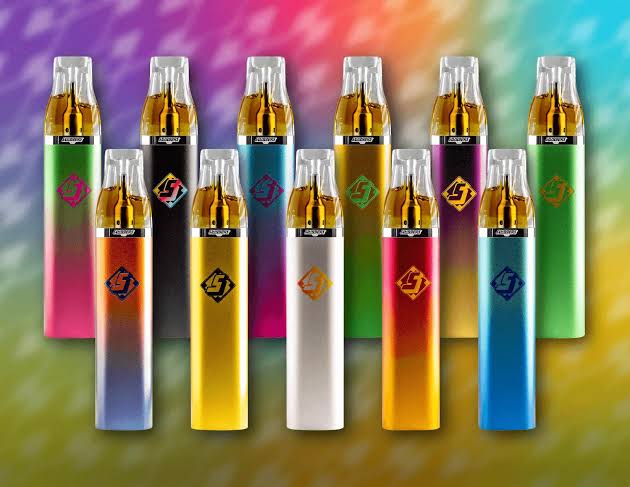
The mega-puff segment is the defining trend of 2026. These devices deliver 30,000 to 50,000 puffs from a single unit, combining large e-liquid reservoirs (18–22ml), rechargeable batteries (650–1000mAh), dual-mesh coils, and smart features like 3D displays and adjustable airflow. The category grew 42.3% year-over-year in Q1 2026, making it the fastest-expanding segment in the disposable vape industry.
| Model | Puff Count | FOB (10K+ units) | Cost/1K Puffs | US MSRP | Gross Margin |
|---|---|---|---|---|---|
| VUCCI VC50000 | 50,000 | $2.40 | $0.048 | $14.99 | 84.0% |
| Geek Bar Pulse 15K (Pulse Mode) | 15,000 | $3.60 | $0.240 | $14.99 | 76.0% |
| SMOK Spaceman 25K | 25,000 | $4.00 | $0.160 | $15.99 | 75.0% |
| Funky Republic Ti7000 | 7,000 | $2.80 | $0.400 | $10.99 | 74.5% |
The VUCCI VC50000 delivers the lowest cost-per-thousand-puffs of any device on the US wholesale market at just $0.048 — combined with an 84% gross margin at $14.99 MSRP. Its 22ml e-liquid capacity, 850mAh rechargeable battery, dual-mesh coil, 3D curved display, adjustable airflow, and child safety lock make it the most feature-complete mega-puff device available to US distributors.
Wholesale reality: Mega-puff devices require slightly higher upfront capital (FOB $2.40–$4.00) but deliver the best cost-per-thousand-puffs in the market. The VUCCI VC50000 at $0.048/1K puffs is 5x more cost-efficient than standard 15K devices and 17x more efficient than economy-tier devices. Reorder cycles stretch to 14–21 days, reducing shipping costs and logistics overhead.
Recommendation: Allocate 20–25% of your inventory to mega-puff devices. This is the growth category — early movers in this segment are capturing market share from competitors still focused on 5K–10K devices. Lead with the VUCCI VC50000 for margin-maximizing orders.
Cross-Tier Puff Economy Comparison
The table below consolidates every tier into a single view, making it easy to see why experienced wholesale distributors are shifting their purchasing mix upward.
| Tier | Puff Range | Avg FOB | Avg Cost/1K Puffs | Avg Margin | Reorder Cycle |
|---|---|---|---|---|---|
| Economy | 2K–5K | $2.90 | $0.646 | 70% | 3–5 days |
| Standard | 8K–15K | $3.30 | $0.295 | 75.6% | 7–10 days |
| Premium | 18K–30K | $3.87 | $0.179 | 75.8% | 10–14 days |
| Mega-Puff | 30K–50K | $3.00 | $0.104 | 79.5% | 14–21 days |
The mega-puff tier delivers 6x better puff economy than standard tier and 16x better than economy — while maintaining the highest average gross margin at 79.5%. The math is unambiguous: distributors who shift inventory toward higher puff-count tiers improve both margin dollars per unit and margin dollars per thousand puffs consumed.
The Optimal Inventory Mix: The 60-30-10 Puff-Count Portfolio
Based on analysis of successful US wholesale distributors operating in 2026, the optimal inventory allocation by puff-count tier follows a 60-30-10 rule (with a small economy allocation):
| Inventory Tier | Allocation | Rationale |
|---|---|---|
| Standard (8K–15K) | 50% | Widest retail acceptance, deepest flavor variety, most predictable demand |
| Premium + Mega-Puff (18K–50K) | 35% | Highest margin, fastest-growing segment, competitive differentiation |
| Economy (2K–5K) | 15% | Budget walk-in customers, convenience store fill-in, seasonal demand |
Compliance Considerations by Puff-Count Tier
Higher puff-count devices face additional regulatory scrutiny. The FDA’s Center for Tobacco Products has flagged mega-puff devices for investigation due to their large e-liquid volumes. As of July 2026, the following compliance considerations apply:
| Compliance Area | Economy/Standard | Premium/Mega-Puff |
|---|---|---|
| PMTA Status | Most legacy brands have pending applications | Newer devices face longer review timelines |
| State Flavor Restrictions | 17 states restrict flavors regardless of puff count | Same 17-state restrictions apply |
| Child Safety Lock | Required in 9 states; most economy models lack it | Standard on premium devices (VUCCI VC50000 includes it) |
| Lithium Battery Regulations | Small batteries, lower risk profile | Larger batteries (850–1000mAh), UN38.3 certification recommended |
| PACT Act Reporting | Standard monthly reporting | Same reporting; higher volumes may trigger additional scrutiny |
The key takeaway: regardless of puff-count tier, the same federal and state compliance requirements apply. However, mega-puff devices with child safety locks (like the VUCCI VC50000) are better positioned for the 9 states requiring child-resistant mechanisms, and distributors stocking these devices avoid the costly retrofit that competitors will face as the regulation expands.
H2 2026 Outlook: Where Puff Count Is Heading
Three developments will shape the puff-count landscape in the second half of 2026:
1. Mega-Puff Compression: The market is consolidating around 15,000–30,000 puffs as the “sweet spot” for consumer satisfaction and retail economics. The 50,000-puff segment (led by the VUCCI VC50000) serves the value-maximizer buyer, but the 15K–25K range will represent the bulk of wholesale volume through 2027.
2. Smart Coil Sensing: Next-generation devices will embed coil health monitoring that adjusts power delivery in real-time, maintaining consistent flavor from puff #1 to puff #50,000. This technology eliminates the “flavor fade” problem that plagues early mega-puff devices from lesser manufacturers.
3. FDA Enforcement Impact: With 623 warning letters issued in H1 2026, the FDA’s enforcement posture will tighten further. Distributors stocking devices with incomplete PMTA documentation — regardless of puff count — face seizure risk at customs. Prioritize manufacturers who provide complete compliance documentation with every shipment.
Quick Decision Framework for Wholesale Distributors
Use this decision tree to align your purchasing strategy with your business profile:
| Business Profile | Recommended Tier Focus | Why |
|---|---|---|
| Single-location smoke shop | Standard (8K–15K) 60% + Economy 40% | Low capital, fast turnover, familiar to walk-in customers |
| Multi-location chain | Standard 50% + Premium/Mega 35% + Economy 15% | Balanced portfolio, margin optimization, competitive differentiation |
| Regional distributor | Premium/Mega 50% + Standard 40% + Economy 10% | Maximum margin per pallet, brand-building with mega-puff, B2B relationships |
| Online-only retailer | Mega-Puff 60% + Premium 30% + Standard 10% | Online buyers calculate cost-per-puff; mega-puff dominates search traffic |
Whichever profile matches your business, one principle holds across every tier: the distributor who understands cost-per-thousand-puffs wins the margin game. Absolute unit price is a distraction — puff economy is what drives long-term profitability.
Ready to Maximize Your Puff-Count Margins?
Contact the VUCCI wholesale team for distributor pricing on the VC50000 — the lowest cost-per-thousand-puffs device on the US market.
Frequently Asked Questions
Q1: What does “puff count” actually measure on a disposable vape?
Puff count is the manufacturer’s estimated number of inhalation activations a device can deliver before the e-liquid is depleted or the battery dies. Industry standard is a 1.5-second draw at consistent power. Real-world puff counts vary 15–25% depending on draw duration, ambient temperature, and whether the device supports variable power modes.
Q2: Is a higher puff count always better for wholesale?
Not always. Higher puff-count devices have better per-puff economics but higher absolute FOB prices and longer reorder cycles. The optimal strategy balances all tiers — typically 50% standard, 35% premium/mega-puff, and 15% economy — to match your specific customer base and cash flow requirements.
Q3: How do I calculate cost-per-thousand-puffs for my wholesale orders?
Formula: (FOB Price ÷ Total Puffs) × 1,000. Example: A $3.60 device with 15,000 puffs = ($3.60 ÷ 15,000) × 1,000 = $0.24 per 1,000 puffs. Always use your landed cost (FOB + freight + duties + insurance) rather than just FOB for accurate margin calculations.
Q4: Why does the VUCCI VC50000 have such a low cost-per-thousand-puffs?
The VUCCI VC50000 combines three factors: a 50,000-puff capacity (the highest in the US wholesale market), a 22ml e-liquid reservoir, and a direct-from-factory FOB price of $2.40 at the 10,000+ unit tier. This yields $0.048 per 1,000 puffs — the most efficient puff economy available to US wholesale distributors.
Q5: Do mega-puff devices (30K+) face different regulations than standard devices?
The same federal (FDA/PMTA, PACT Act) and state-level regulations apply regardless of puff count. However, mega-puff devices with larger lithium batteries should carry UN38.3 certification for air freight. Devices with child safety locks — like the VUCCI VC50000 — are ahead of the regulatory curve in the 9 states that mandate child-resistant mechanisms.
Q6: What puff-count tier is growing fastest in 2026?
The mega-puff tier (30K–50K) is growing at 42.3% year-over-year, followed by the premium tier (18K–30K) at 28.7%. The economy tier (2K–5K) is declining at roughly 8% per quarter. Standard tier (8K–15K) remains stable with 2–3% growth, anchored by established brands like Geek Bar and Lost Mary.